At the scene
If it is safe, identify the street or intersection, vehicle positions, impact points, traffic controls, weather, witnesses, and available video.
MARYLAND ACCIDENT EDUCATION
Kevin Goldberg Goldberg Law
Practical information about collision documentation, police reports, insurance questions, treatment records, and the attorney-review process—without declaring fault or promising an outcome.
Submitting information requests review only and does not create an attorney-client relationship.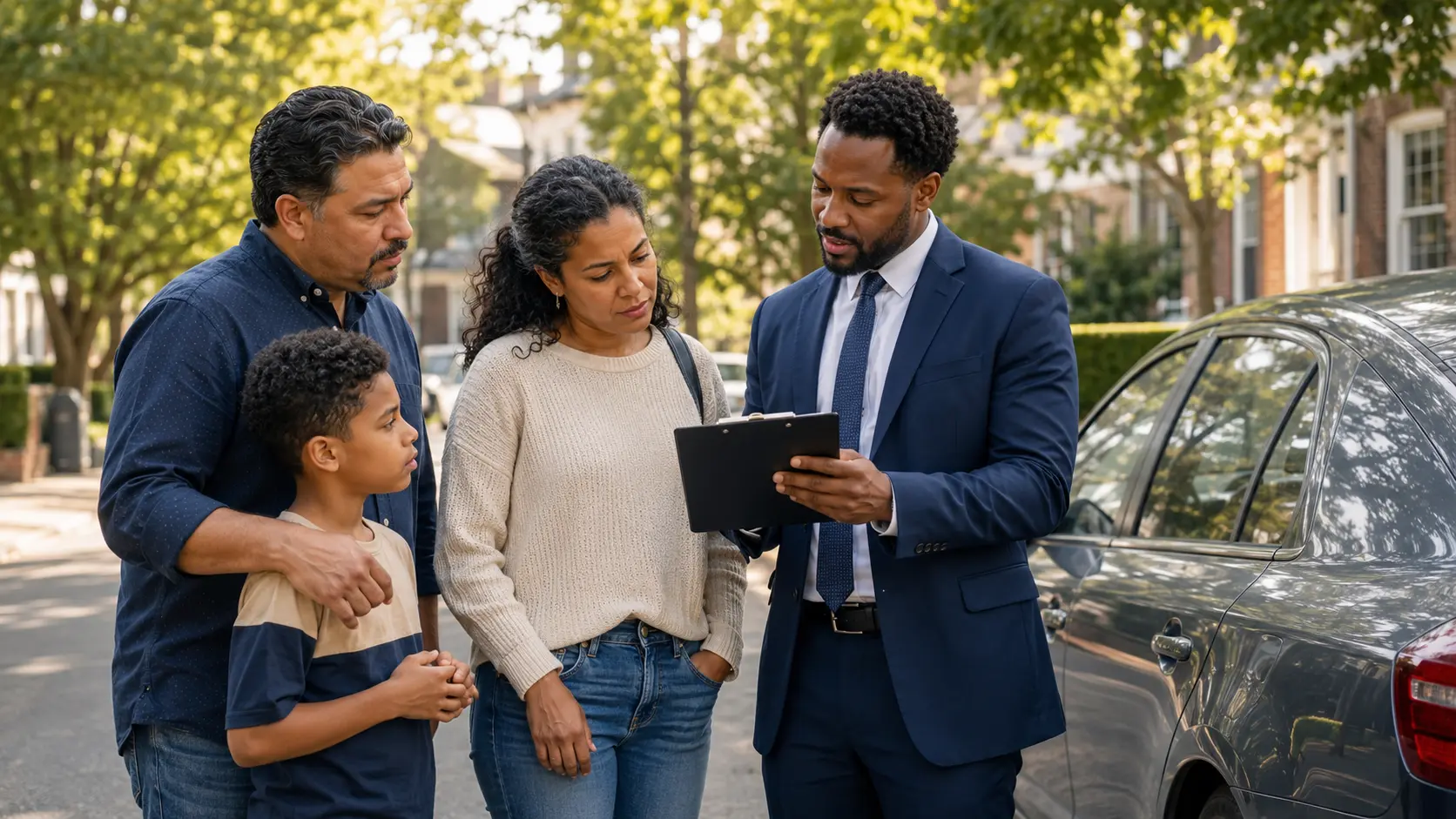
These prompts help preserve a usable timeline. They are general educational information, not individualized legal advice.
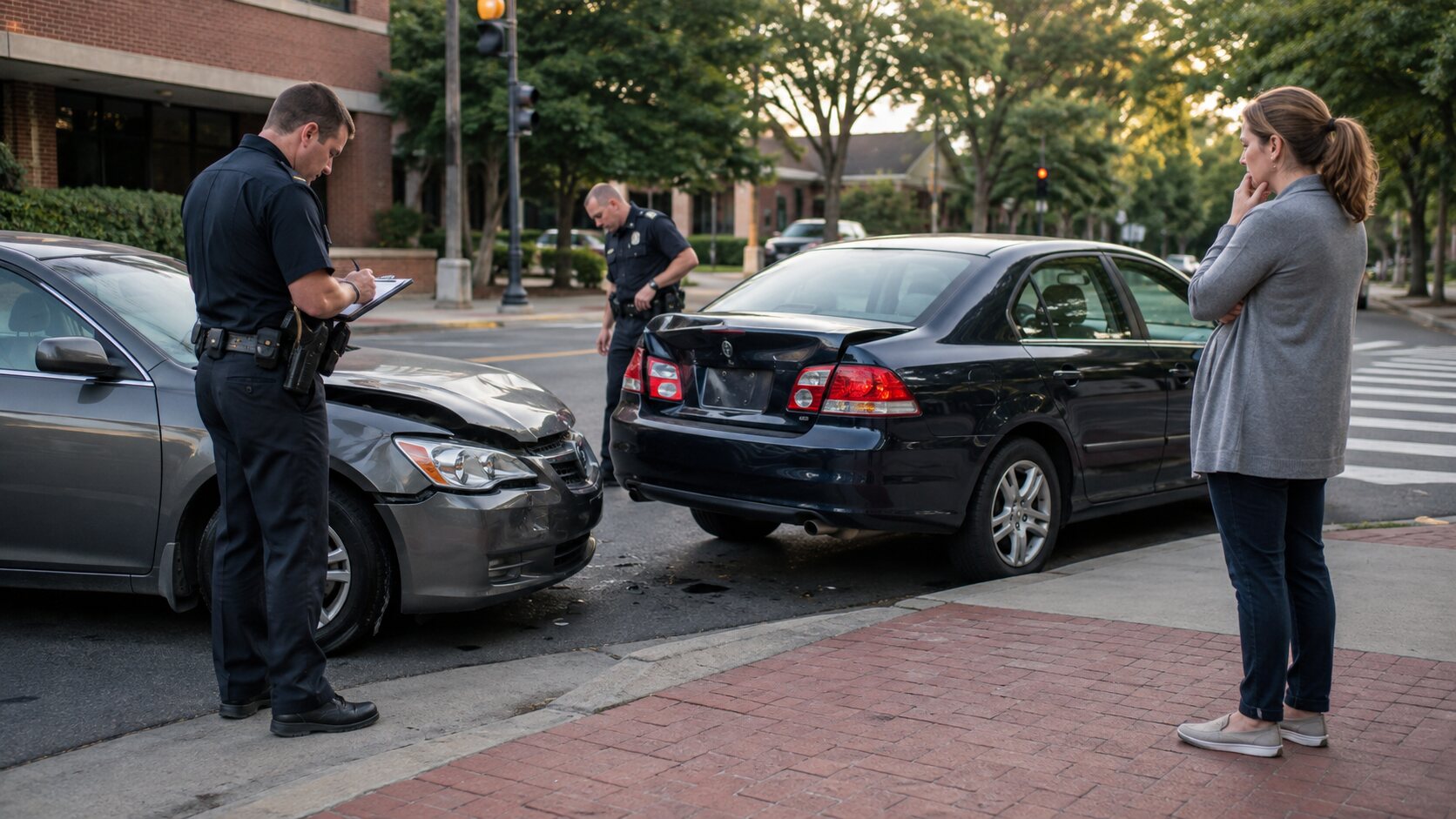
A fictional Montgomery County scene showing why photographs, officer information, vehicle positions, and witness details can matter to a later review.
If it is safe, identify the street or intersection, vehicle positions, impact points, traffic controls, weather, witnesses, and available video.
Record the agency, officer name or identification, incident number, and whether a citation was issued. A report does not itself decide every legal issue.
Collect driver, vehicle owner, carrier, policy, employer, rideshare, and UM/UIM information when available. Coverage remains subject to verification.
Document reported symptoms, when care began, providers, appointments, bills, and missed work. The intake does not diagnose or recommend treatment.
Start with the facts. AI may collect and organize information; a human attorney makes legal and representation decisions.